Safeguarding Information
Safeguarding is everyone’s responsibility
Snowdon Village Academy is committed to safeguarding and promoting the welfare of child and young people. It is our expectation that all staff, volunteers and members of the school community share this commitment.
Meet the Team
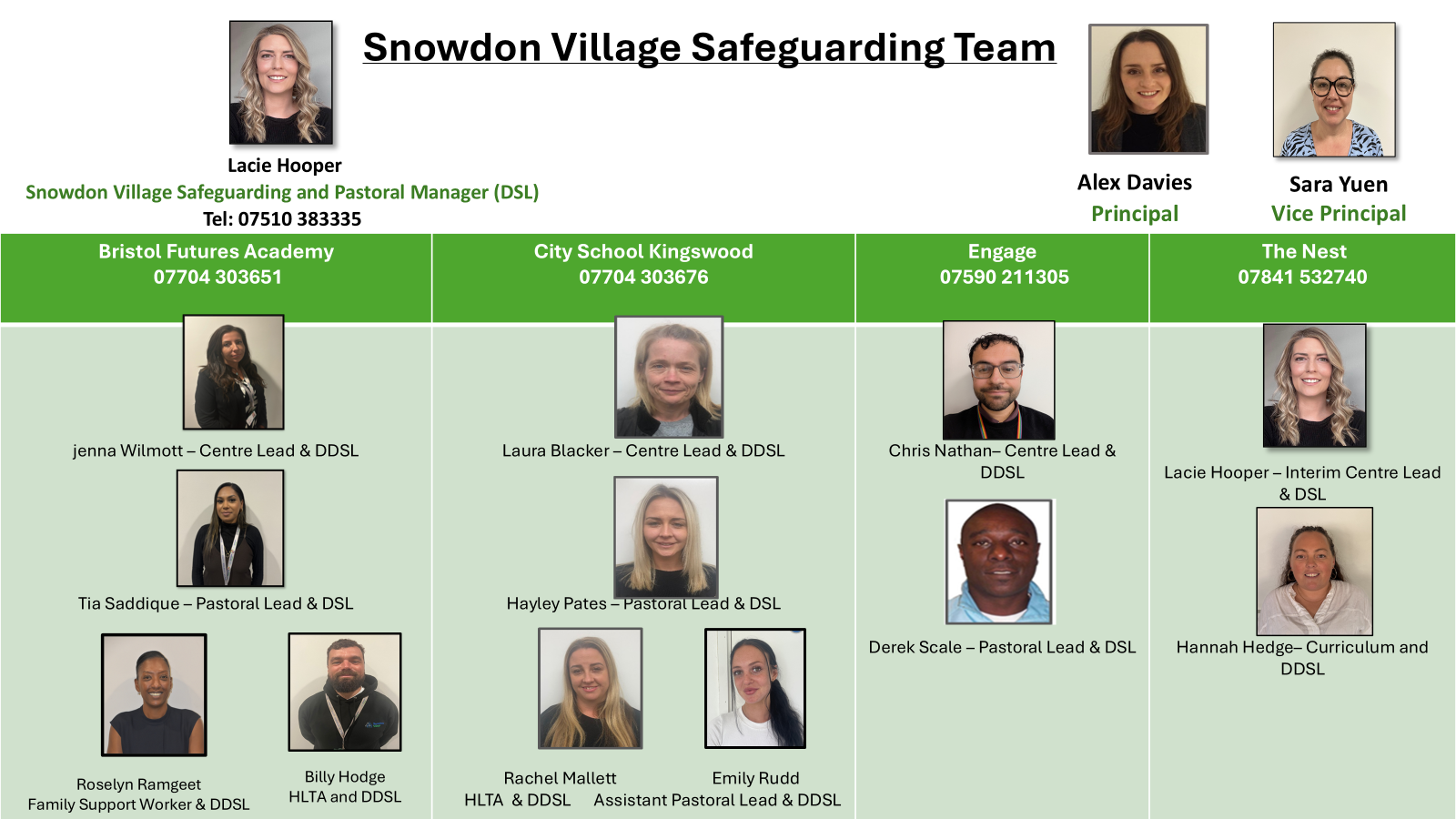
Our Academy Councillor for Safeguarding is Brigid Allen.
Reporting Concerns
If you have a safeguarding or child protection concern in regard to a student it can be referred to the Designated Safeguarding Lead at the site your child attends:
Bristol Futures Academy – Tia Saddique (Tia.saddique@clf.uk)
City School Kingswood – Hayley Pates (Hayley.pates@clf.uk)
Engage – Derek Scale (Derek.scale@clf.uk)
The Nest – Abi Kirby-Shoyer (Abi.kirby-shoyer@clf.uk)
Or the Safeguarding Lead for Snowdon Village – Lacie Hooper (lacie.hooper@clf.uk) or telephone 07510 383335.
If you have a safeguarding concern you can email the SV Safeguarding team on Safeguarding@sv.clf.uk
Student Friendly Safeguarding Policies (Page 4)
Education Safeguarding Contacts Bristol 2026-27
| Priority safeguarding contacts | |||
| If you have concerns about a child/young person in Bristol | |||
| If a child is at immediate risk call the police. | POLICE – 999 | ||
| To make a referral where a child is likely to suffer, or is suffering, significant harm, call children’s social care. | FIRST RESPONSE – 0117 903 6444 | ||
| Out of hours referrals. | EMERGENCY DUTY TEAM – 01454 615 165 | ||
| Mental health crisis support, 24 hours a day, 7 days a week. | Bristol Mental Health – 0300 555 0334 | ||
| To raise concerns and ask for advice about radicalisation. Also contact First Response where appropriate. | PREVENT DUTY – 01278 647466 | ||
| To liaise with the specialist safeguarding police unit. | Lighthouse Safeguarding Unit (Avon and Somerset Police) – 01278 649228 | ||
| For advice and guidance about whether to make a referral. | Family Help | ||
| South 0117 903 7770 | East Central 0117 357 6460 | North 0117 352 1499 | |
| If you have concerns about a professional working with a child | |||
| To raise concerns and ask for guidance in relation to the conduct of someone who works with children. | Local Authority Designated Officer (LADO) T: 0117 903 7795 KBSP LADO notification form | ||
| For information, advice and guidance in relation to safeguarding policy and procedures | |||
| Safeguarding in Education Team T: 0117 922 2532 | |||
| South Advisor Helen Macdonald helen.macdonald@bristol.gov.uk 0117 922 2533 | East Central Advisor Elizabeth Male 0117 922 2532 | North Advisor Colin Clements 0117 922 2532 | |
| Additional safeguarding contacts | |
| Child sexual exploitation | Operation Topaz (Avon and Somerset Police) |
| Safer Connections Partnership support: to request non-urgent, non-case-specific support from the Partnership Team, such as consultations, training, or coordination around emerging concerns. E: saferconnections@bristol.gov.uk | |
| Report a Child Missing from Education | Bristol City Council – Education Welfare https://www.bristol.gov.uk/schools-learning-early-years/children-missing-education-cme |
| Children affected by forced marriage | Forced Marriage Unit T: 020 7008 0151 |
| Online safety advice | Professional Online Safeguarding Helpline T: 0344 381 4772 |
| Reporting online abuse and grooming | Child Exploitation and Online Protection command |
| FGM advice | NSPCC FGM Helpline T: 0800 028 3550 |
| Domestic abuse support in Bristol | Directorate of local and national services |
| Young carers – advice and support | Carers Support Centre T: 0117 958 9980 W: https://www.carerssupportcentre.org.uk/young-carers/contact-young-carers/ |
| Whistleblowing professional policy | NSPCC Whistleblowing Hotline T: 0800 028 0285 |
| Child and Adolescent Mental Health Service (CAMHS) | |
| Primary Mental Health Specialists advice – Child and Adolescent Mental Health | |
| South 0117 340 8121 | East Central 0117 340 8600 North 0117 354 6800 |
| Avon and Wiltshire Mental Health Partnership NHS Trust 24/7 crisis line: 0800 953 1919 | |
| Advice around harmful sexualised behaviour. | Be Safe 0117 340 8700 W: https://www.awp.nhs.uk/camhs/camhs-services/HSB-services/be-safe |
| Sexual behaviours guidance and training. | Brook Traffic Light Tool CPD: Brook Sexual Behaviours Traffic Light Tool (RSE) Course |
Safeguarding Newsletters
2025-2026
Safeguarding Newsletter – Term 1 2025-2026 – Firework Safety
Safeguarding Newsletter – Term 2 2025-2026 – Online Safety
Safeguarding Newsletter – Term 6 2025-2026 – Summer Safety
2024-2025
Safeguarding Newsletter – Term 3 2024 – 2025 – Online Safety
Safeguarding Newsletter – Term 4 2024 – 2025 – Mental Health & Wellbeing
Safeguarding Newsletter – Term 6 2024-2025 – Summer Safety
Online Safety
At Snowdon Village Academy we aim to equip our students with the knowledge, understanding and skills to use information and communication technology creatively and purposefully.
Online technologies play a huge role and so providing a e-safety education is vital to ensuring that students can navigate the online world safely and positively. Students learn about e-safety during PSHE sessions as well as assemblies.
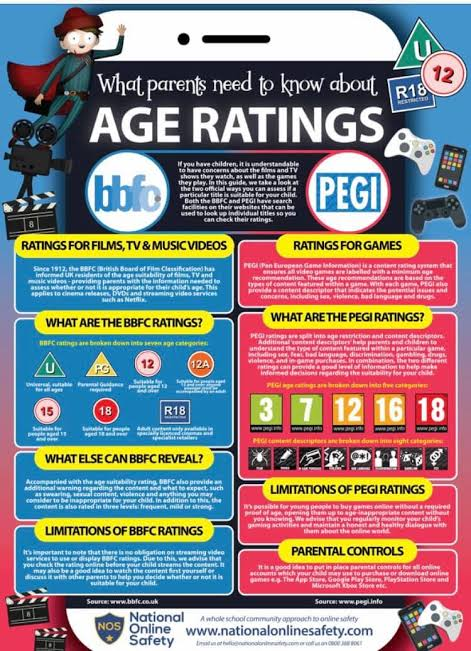
Please see the resources below for further support.
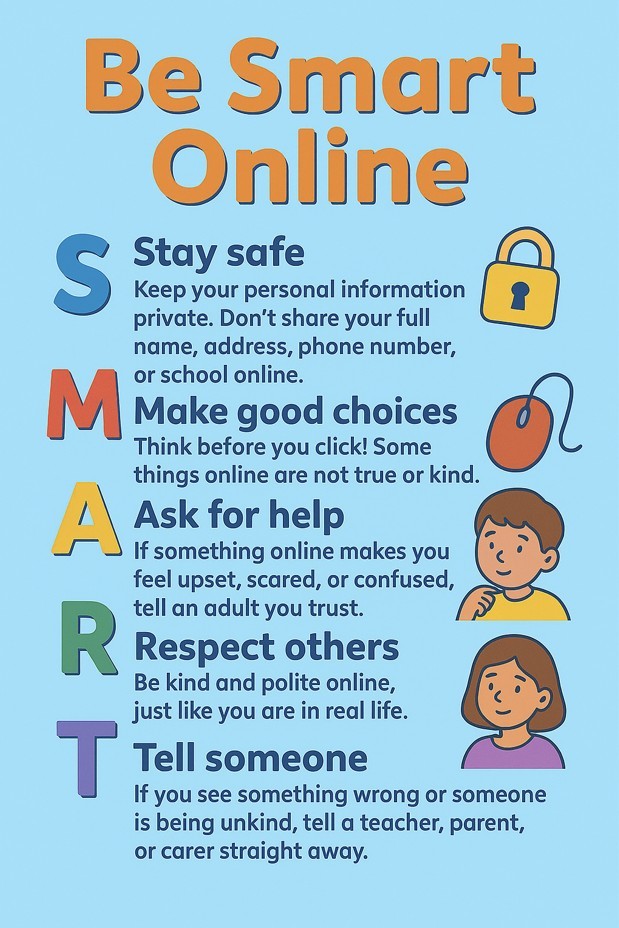
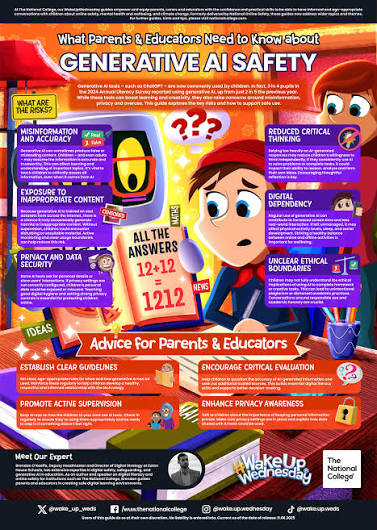
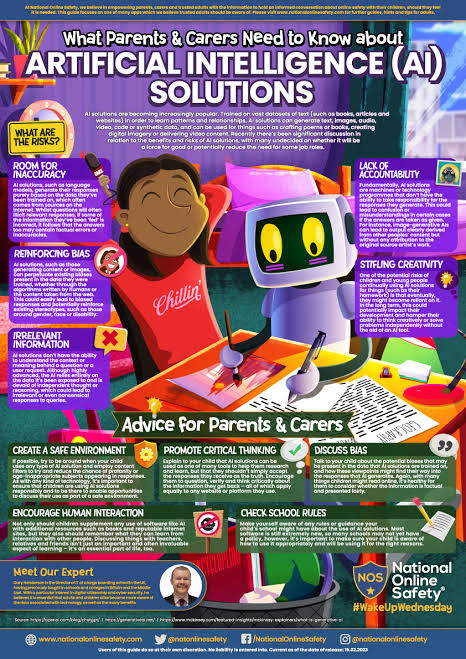
AI – Artificial Intelligence
NSPCC – AI Safety Tips for Parents
PREVENT
Prevent is about safeguarding people and communities from the threat of terrorism. Prevent is 1 of the 4 elements of CONTEST, the Government’s counter-terrorism strategy. It aims to stop people becoming terrorists or supporting terrorism.
Incidents of extremism and radicalisation are rare and as such when they do occur, make the news. As with all safeguarding issues, it is important to be vigilant, and not complacent, but also not to panic.
What is extremism and radicalisation?
Prevent defines extremism as: “vocal or active opposition to fundamental British values, including democracy, the rule of law, individual liberty and mutual respect and tolerance of different faiths and beliefs. We also include in our definition of extremism calls for the death of members of our armed forces”
Radicalisation is defined by the UK Government within this context as “the process by which a person comes to support terrorism and extremist ideologies associated with terrorist groups.”
However…
We live in a wonderfully diverse world, with both differences and similarities to celebrate. Exploring religious and different social beliefs, in a peaceful and non-violent way, is part of growing up and should not be confused with something more sinister. The best way to PREVENT extremism and radicalisation is by open discussion and increased understanding of each other.
Top Tips for Parents and Carers to discuss radicalisation with Children
Operation Encompass
Our school is part of Operation Encompass.
Operation Encompass is a national police and education early intervention safeguarding partnership which supports children who experience Domestic Abuse.
Operation Encompass is in place in every police force in England and Wales, the Isle of Man, Jersey, Guernsey, Scotland, Northern Ireland and Gibraltar.
Children were recognised as victims of domestic abuse in their own right in the 2021 Domestic Abuse Act.
There is a legislative requirement for police forces to share information with educational settings through Operation Encompass.
Through Operation Encompass the police will share information with our school about ALL police attended domestic abuse incidents which involve any of our children who are related to either of the adults involved in the incident. This sharing of information will occur PRIOR to the start of the next school day. The notification will inform us about the context of the incident and will include the Voice of the Child.
Private fostering: looking after someone else’s child
Private Fostering applies when a child under 16 (or 18 if disabled) is cared for for 28 days or more by someone who isn’t a close relative or a person with parental responsibility. This private arrangement requires legal notification to the council
What You Need to Know
By law, parents and carers must notify Bristol City Council about the private fostering arrangement.
Who counts as a close relative?
Parents, step-parents, grandparents, siblings, aunts, or uncles. Friends, great-aunts, or cousins do not count and require private fostering arrangements if the care lasts 28+ days.
- Notification timeline: You should notify the council at least six weeks before the arrangement starts, or immediately if the arrangement has already begun.
How to Contact BCC
- Phone: Call the dedicated private fostering line at 0117 903 6444 to notify them and receive guidance.
- Online: Visit the Bristol City Council portal for full information on the process.
Private Fostering – Bristol City Council
Safeguarding Resources
Online Safety
Be Kind Online
Online abuse can have a severe impact on people’s lives and is often targeted at the most vulnerable. Cyberbullying has been shown to have psychological and emotional impact. In order for us to develop empathy for others we sometimes need to move away from fulfilling our own needs and think about the needs of others. This is sometimes more challenging online because we cannot see the person, connect with how they feel nor interact face to face.
In the guide, you’ll find tips such as understanding the impact of your actions, disassociating from pack mentality and developing self-empathy.
Resources for students
Report remove tool for students who need support with removing images put online
Resources for Parents and Carers
Adding parental controls on home devices
NSPCC – Online Safety for families with children with SEND
Exploitation
Exploitation is when someone takes advantage of a child for their own profit or gain. It can take different forms. This includes:
- Child criminal exploitation – when a child is manipulated or pressured to take part in criminal activity, including selling drugs.
- Child sexual exploitation – a type of sexual abuse where someone is coerced, manipulated or pressured into sexual activity (this might be in exchange for gifts, affection, money or social status).
Both types of exploitation can be hard for a child to recognise and they may not understand that they are being coerced.
Support for Parents around Child Criminal Exploitation and Child Sexual Exploitation
Action for children – child exploitation
Support for young people around Child Criminal Exploitation and Child Sexual Exploitation
NSPCC – Talk PANTS campaign
Since 2013, Pantosaurus has helped over six million parents to Talk PANTS and help keep children safe from sexual abuse.
Developed with children, parents, carers and teachers, Talk PANTS is here to help children understand that their body belongs to them, and they should tell a safe adult they trust if anything makes them feel upset or worried.
Mental Health and Wellbeing
Mental health and mental illness are part of a ‘spectrum’, just as physical health and illness are. Throughout our lives, many different things can lead us to move up and down the spectrum such as the start or end of relationships, starting at a new school or exams stress, changes in physical health and good news or worries about those we are close to.
It is important to remember that recovery is possible, even from severe mental ill health, and that people with a mental ill-health diagnosis may be managing their condition well and still experiencing high levels of well-being.
Often, life events that are outside our control can damage our mental health, and this is made worse if we feel powerless to do anything about them.
One of the ways we can re-gain a sense of control and nourish our mental health is to remember ‘the five ways to well-being’ which have been found in research to improve mental well-being in children and adults.
Mental Health Support
Bullying
Bullying is any repeated behaviour that intentionally hurts someone else. It can be physically or emotionally hurtful, or both. It can happen anywhere. It might be at school, a workplace, online, in social spaces or at home.
Bullying is never okay or excusable. It can have a huge impact on a young person’s wellbeing. It can also have a longer-term effect on their mental health, even after it has stopped.
If you are a student and feel you are being bullied at school or, If your child is being bullied, please report it to a member of staff or the safeguarding team. We are here to help you. You can also email our Designated Safeguarding Lead for Snowdon Village – Lacie Hooper – lacie.hooper@clf.uk who will pass this on to the most appropriate member of staff to support.